
Decoding"LaughingGas":Properties, Applications and Scientific Regulation of Nitrous Oxide (N₂O)
Decoding"LaughingGas":Properties, Applications and Scientific Regulation of Nitrous Oxide (N₂O)
Nitrous oxide (N₂O), commonly known as "laughing gas", is a nitrogen oxide with multiple properties. When it is mentioned, some people will think of the short-term pleasure in entertainment scenarios, but few know its important value in medical, food, industrial and other fields; at the same time, its abuse risks and environmental protection attributes also deserve our high attention. Combining the latest research and industry standards, this article will comprehensively analyze the molecular properties, diverse applications, production control and safety and environmental protection requirements of nitrous oxide, leading you to a comprehensive understanding of this "both positive and negative" special gas.
I. Molecular Structure and Basic Properties: A "Dual Personality" in Stability
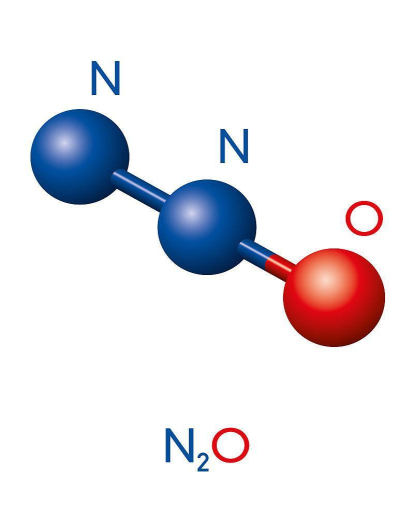
Nitrous oxide is a linear molecule composed of two nitrogen atoms and one oxygen atom, adopting sp hybrid orbitals with delocalized π bonds. This unique molecular structure endows it with the dual characteristics of stability and reactivity, laying the foundation for its diverse applications. Under normal temperature and pressure, it is a colorless gas with a slightly sweet taste, with a density about 1.5 times that of air, a critical temperature of 26.5℃, and a critical pressure of 7.26MPa. This key characteristic allows it to be liquefied by pressurization at room temperature, greatly reducing storage and transportation costs and facilitating large-scale applications.
In terms of chemical properties and physiological effects, the "dual personality" of N₂O is particularly prominent, and its discovery and research have a profound historical accumulation:
• Stability: Under the environmental conditions of -50℃ to 50℃, nitrous oxide shows good stability. It does not react with most substances at room temperature, causes no obvious irritation to the human respiratory tract, does not participate in metabolism in the body, is excreted in its original form, and has no adverse effects on liver and kidney functions. At the same time, it does not react with water, acid and alkali solutions, and is only soluble in water under specific pressure. The nitrous acid formed after dissolution is unstable and easily decomposes into water and N₂O itself.
• Reactivity: At high temperatures (>500℃), nitrous oxide decomposes into nitrogen and oxygen, becoming a strong oxidant that can not only support the combustion of conventional substances but also enable some inert substances to burn in its atmosphere. In addition, it can also react with alkali metals, alkaline earth metals and transition metals such as iron, cobalt and chromium, and release a lot of heat when reacting with substances such as hydrogen, ammonia and carbon monoxide, which has important application value in industrial synthesis and energy fields.
• Physiological Effects and Origin of the Name: As early as 1772, Joseph Priestley, a British natural philosopher and chemist, first synthesized nitrous oxide gas and named it "inflammable nitrous air". In 1794, Thomas Beddoes and James Watt collaborated to publish relevant works, invented special equipment for producing and inhaling the gas, and tried to use it to treat lung diseases such as tuberculosis. In 1799, Humphrey Davy, a British chemist, discovered in experiments that inhaling this gas can make people relax, feel pleasure, and even trigger laughter, hence the common name "laughing gas". At the same time, he also put forward the idea that it can be used to relieve surgical pain. In 1844, nitrous oxide was first explicitly used as an anesthetic for tooth extraction, officially opening the course of its medical application.
It is worth emphasizing that nitrous oxide is a greenhouse gas clearly defined in the Montreal Protocol and also an air pollutant. In addition to natural sources, it mainly comes from agricultural production, industrial production and fuel combustion. Its Global Warming Potential (GWP) is about 300 times that of carbon dioxide, and it remains in the atmosphere for as long as 120 years. It is also the main scavenger of stratospheric ozone, and its damage to the ozone layer is equivalent to that of chlorofluorocarbons, which puts forward strict environmental protection requirements for its production, use and emission.
II. Diverse Application Fields: A Cross-Industry Expert from Medical Care to Aerospace
With its unique physical and chemical properties and physiological characteristics, the application scenarios of nitrous oxide have been widely covered in medical, food, electronics, aerospace and other fields, becoming an indispensable key raw material in the modern industrial system and people's livelihood fields. Its application value has long surpassed the "entertainment attribute" and penetrated into many aspects of production and life.
1. Medical and Health Field: An Ancient and Reliable Anesthetic Analgesic
As one of the earliest medical anesthetics used by humans, nitrous oxide still plays an irreplaceable role in dentistry, obstetrics, emergency medicine and other fields. It has unique pharmacological properties. Its analgesic effect mainly comes from its ability to promote the release of the human body's own endorphins and dopamine, blocking the transmission of pain signals; at the same time, as a non-specific N-methyl-D-aspartate (NMDA) receptor antagonist, it can achieve anesthetic effect, and its blood/gas partition coefficient is low (0.47), with fast induction and recovery speed and high safety.
In clinical applications, it is usually mixed with oxygen at a ratio of 30%-70%, which can not only provide effective analgesia but also keep the patient conscious, avoiding the risk of deep anesthesia. In labor analgesia, puerperae can independently control the timing of inhalation, relieving pain without affecting the labor process, which is widely recognized by medical institutions and puerperae; in dental surgery, it can effectively reduce the patient's pain and surgical fear; in emergency scenarios, it can quickly relieve traumatic pain and gain time for treatment. In addition, nitrous oxide is also included in the WHO Essential Medicines List, widely used in surgical operations in resource-constrained areas, and can also be used as an auxiliary drug for the treatment of drug addiction.
2. Food Industry: A Safe and Efficient "Leavening Master"
As a legal food additive (No. E942), nitrous oxide is an ideal foaming agent, preservative and propellant in the food industry, widely used in the production of desserts, beverages and other fields. Its core advantage is that it is easily soluble in fats under pressure, and forms fine and uniform bubbles when released, making desserts such as cream, mousse and cakes light in texture and delicate in taste. At the same time, it does not react with food ingredients, has no residues, and its safety is widely recognized by the industry.
Compared with traditional foaming agents, N₂O has three significant advantages: first, high safety, no residues, no peculiar smell, and no impact on the flavor and quality of food itself; second, long-lasting expansion effect, which can effectively maintain the stable shape of food and extend the shelf life of food; third, it also has a preservative effect, which can inhibit the production of ethylene in fruits, reduce fruit rot, and can also be used for food cooling, freezing and storage. In the coffee industry, N₂O is also used to make nitrogen-infused coffee. By injecting it into coffee under high pressure, it endows the drink with a smooth taste and a unique foam layer, enriching the consumer experience.
3. Industrial and High-Tech Fields: A Precise and Controllable Reaction Medium
In industrial and high-tech fields, the application of nitrous oxide is more professional, becoming a key raw material to promote technological upgrading and improve product quality, covering many high-end fields such as chemical industry, electronics, aerospace and automobile:
• Chemical Synthesis: As a mild oxidant, nitrous oxide is widely used in selective oxidation reactions in organic synthesis, such as alkene epoxidation and alcohol oxidation, which can effectively improve reaction selectivity and yield. At the same time, as a nitrogen donor, it can be used in transition metal-catalyzed oxidation reactions to synthesize more complex molecules, helping chemical enterprises improve quality and efficiency.
• Electronics Industry: High-purity N₂O (above 99.999%) is a core raw material for semiconductor manufacturing. As an oxidant in the Chemical Vapor Deposition (CVD) process, it can grow high-quality silicon oxide films, accurately control film thickness and dielectric properties, ensure the quality and stability of semiconductor chips, and is an important support for the upgrading of the electronic industry.
• Aerospace and Automobile: In rocket propulsion systems, nitrous oxide is used as an oxidant to mix with fuel to generate strong thrust, and it can be stored at a relatively high density, making it easy to store on spacecraft for a long time, making it an ideal aerospace propellant; in the racing field, it is the core component of the "NOS system". After being injected into the engine, it can reduce air temperature, increase oxygen content, promote full combustion of fuel, and instantly increase engine power by 30%-50%, helping to exert extreme performance.
III. Production Process and Quality Control: Dual Guarantee of Safety and Purity
Industrial-grade nitrous oxide is mainly produced by the thermal decomposition method of ammonium nitrate, with the core reaction formula: NH₄NO₃ → N₂O + 2H₂O (reaction temperature 250℃, exothermic 59kJ/mol). Although this process seems simple, it has extremely high requirements for temperature control — for every 10℃ increase in temperature, the decomposition rate doubles, and if the temperature exceeds 300℃, it may cause an explosion. Therefore, the safety and accuracy of the production process are crucial.
In modern production, by adding phosphate stabilizers and adopting precise temperature and pressure control technologies, reaction out of control can be effectively avoided, ensuring safe production and producing industrial-grade products with a purity of up to 99.99%. For high-purity requirements such as electronic grade (such as semiconductor manufacturing), further impurity removal is required through deep purification processes. The specific processes include: first, condensation distillation to remove moisture and high-boiling point impurities; second, adsorption method to remove trace oxygen, nitrogen and hydrocarbons; third, catalytic purification to remove harmful impurities such as nitric oxide, and finally achieve the high-purity requirement of more than 99.999% to meet the use needs of high-end industries.

IV. Safety Specifications, Abuse Hazards and Environmental Management: Core Guidelines for Scientific Use
Although nitrous oxide has important value in many fields, it also has abuse risks and environmental pressure. China has included it in the List of Hazardous Chemicals, and illegal production, purchase, sale, transportation and use shall bear legal responsibilities. Therefore, scientific control and standardized use are the prerequisites for it to exert its value, and three aspects need to be focused on: safe use, abuse hazards and environmental governance.
1. Safety Use Specifications
The safe use of nitrous oxide must strictly follow the two key points of storage and transportation safety and operational safety to eliminate potential safety hazards:
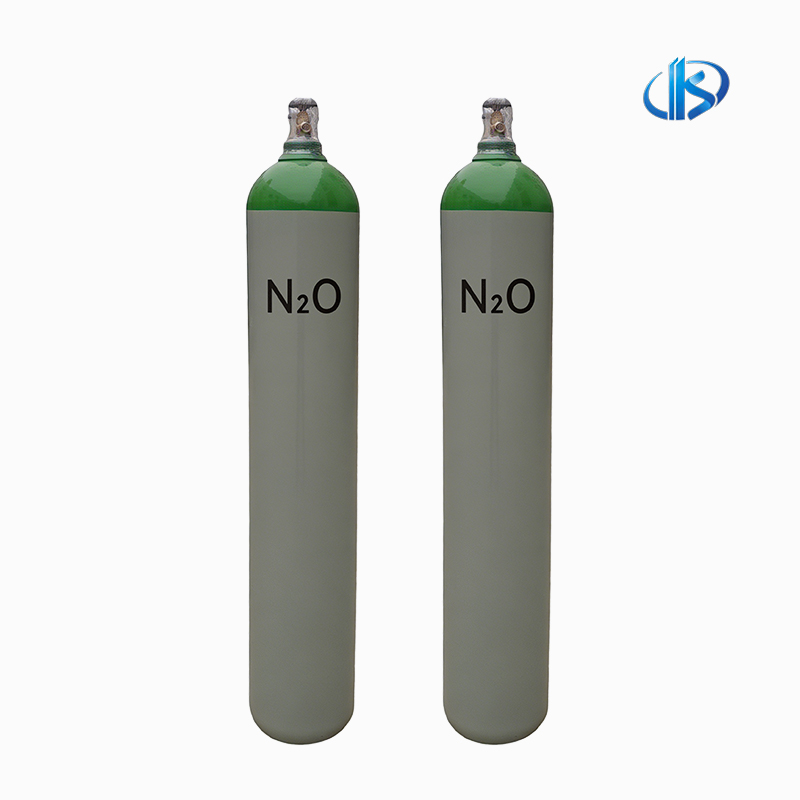
• Storage and Transportation Safety: Store in a cool and well-ventilated warehouse, strictly control the warehouse temperature ≤30℃, keep away from fire and heat sources, and avoid direct sunlight; store separately from flammables, reducing agents and active metal powders, and strictly prohibit mixed storage and transportation; cylinders must be stored upright and fixed, handled with care during transportation to avoid impact and damage, and prevent gas leakage; transportation must comply with the regulations on the transportation of dangerous goods, be equipped with professional leakage emergency equipment, and arrange special personnel to follow up to ensure the safety of the entire transportation process.
• Operational Safety: Adopt a closed operation mode to ensure good ventilation in the operation environment, and timely check and handle potential gas leakage hazards; operators must receive professional training, be familiar with product characteristics and operation specifications, and wear corresponding protective equipment before taking up the job; inhalation of pure nitrous oxide is strictly prohibited to prevent hypoxia and asphyxiation (oxygen concentration must be strictly controlled ≥30% in medical applications); the rapid gasification of liquid nitrous oxide will absorb a lot of heat, so avoid direct skin contact to prevent frostbite.
2. Environmental Management Requirements
Combined with the greenhouse effect of nitrous oxide and the risk of ozone layer damage, its production and use must strictly follow environmental protection standards: production enterprises need to optimize processes to reduce leakage and emissions during production; use enterprises need to strengthen waste gas recovery and treatment to avoid direct emission of gas into the atmosphere; relevant departments need to strengthen supervision over the emission link, promote enterprises to adopt green production technologies, reduce the impact on the ecological environment, and realize the coordinated development of industrial development and environmental protection.
Conclusion: Scientific Cognition and Standardized Utilization to Let "Laughing Gas" Play a Positive Value
From the people's livelihood guarantee of medical analgesia to the quality improvement of food processing; from the precise support of semiconductor manufacturing to the power empowerment of aerospace propulsion, nitrous oxide, with its unique physical and chemical properties, has become an indispensable "invisible assistant" in the modern industrial system. But at the same time, we also need to clearly realize its abuse hazards and environmental pressure, strictly follow safety specifications and regulatory requirements, eliminate illegal abuse, and promote it to empower the high-quality development of various industries under the premise of legality and compliance. Only through scientific cognition and standardized utilization can this gas with multiple properties truly serve the progress and development of human society.